Aliens: Fireteam Elite 2 Beginner Guide
Everything a new Colonial Marine needs for a first session — campaign structure, class choice, weapon slots, enemy priorities and progression — with every fact linked to official or documented coverage. No invented stats.
What you're signing up for
Aliens: Fireteam Elite 2 is a third-person co-op shooter from Cold Iron Studios (published by Daybreak Game Company), released August 25, 2026 for PC, PlayStation 5 and Xbox Series X|S. You play a Colonial Marine deployed to the Storr Boon's Mining Facility on planet LV-558, fighting Xenomorphs and hostile synthetic androids across 15 missions in four biomes. Each mission runs with a fireteam of up to four players — empty seats are filled by AI allies — and the sequel supports cross-platform play and voice chat at launch (Wikipedia; official site).
Between missions you return to the USS Endeavor, the hub ship where you can buy items from vendors and customize your Marine. Beyond the campaign there is an updated Horde mode, and optional Challenge Cards that modify mission parameters with both perks and debuffs (Wikipedia).
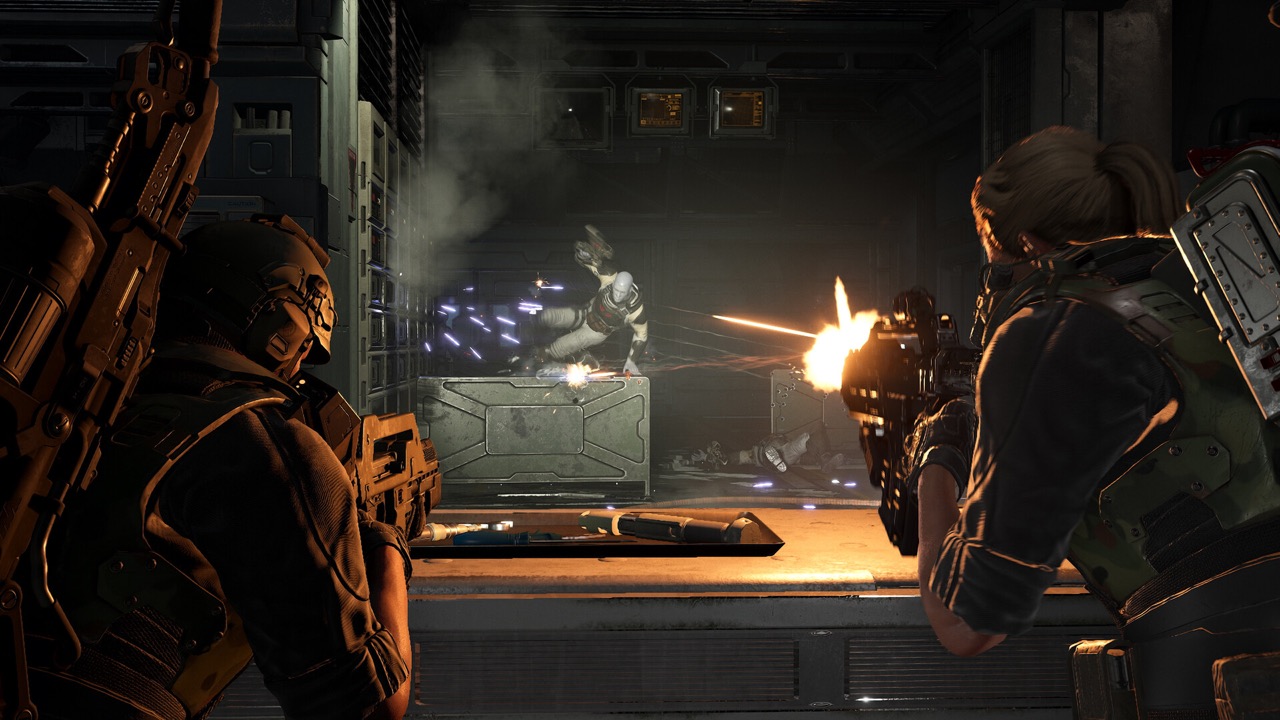
Your first three steps
- 1. Pick a forgiving class. Medic and Hunter are the kindest starters — healing forgives positioning mistakes, and sustained SMG/shotgun fire forgives aim mistakes. Full reasoning in the class database.
- 2. Learn the three weapon slots. Every Marine carries a primary weapon, a sidearm with infinite ammo, and a Signature weapon. Your sidearm is the fallback when a reload would get you killed — see the armory.
- 3. Play the campaign before Horde. The 15 missions teach enemy types and class timing at a gentler ramp; Horde mode assumes you already hold a lane under pressure.
Campaign structure
The campaign's 15 missions span four distinct biomes, each with its own environmental features, and mix Xenomorph swarms with synthetic firefights — so a loadout that only handles one enemy family will eventually get punished. Challenge Cards let you rerun missions with modifiers for extra rewards once you know the maps (Wikipedia).
Know what wants you dead
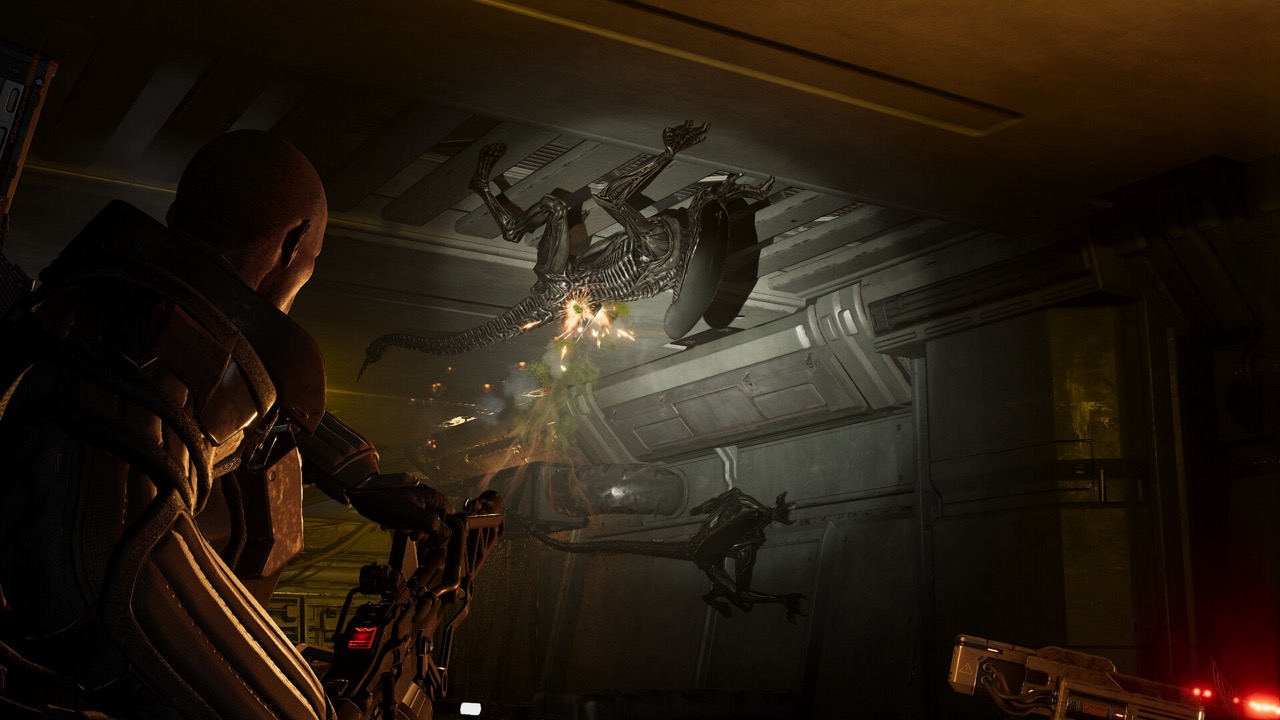
Cold Iron's Steam News feed has highlighted five threats worth learning early (G2A's summary of the Steam News posts):
| Enemy | What it does | Squad answer |
|---|---|---|
| Warden | Frontline brawler and zone controller | Split up and engage from multiple angles |
| Harbinger | Relentlessly chases and can immobilize a Marine with a grapple | Keep mobility tools ready; focus it before contact |
| Crusher | Charges head-on and bashes anyone in its path | Dodge the full charge sideways, then punish |
| Drone | Fast, hard-hitting ambusher using vent networks | Focused squad firepower to pin it down |
| Exploder | Splash-damage kamikaze creeping from walls and ceilings | Watch vertical routes and keep spacing |
Loadout basics that actually matter
- Elemental ammo covers bad matchups. Four types — fire, cryo, electric and piercing — each target different enemy weaknesses (Wikipedia). If your class struggles against armor or swarms, ammo is the patch.
- Attachments, fire modes, Augments and Traits reshape every gun; Augments unlock on fully upgraded weapons (official site; AvP Central).
- Range beats raw stats. Showcase kit-UI figures show dramatic falloff — the OCAP-91 Volcan flamethrower does nothing past ~30 meters, while the M12A1 rocket launcher holds to ~80. Match the gun to the room, not the number (AvP Central).
Progression: the road to Specialist
The sixth class, Specialist, unlocks after you level the other classes and lets you mix major and minor abilities from across the roster into one custom Marine (G2A / Steam News; official site). Treat your first sessions as research: every class you level becomes a part in your eventual Specialist build. When you get there, the Build Planner and our Specialist build frameworks are waiting.
Sources on this page: Wikipedia · official game site · G2A (Steam News summaries) · AvP Central · screenshots from the official Steam store page. Per our editorial policy, no stats are invented.